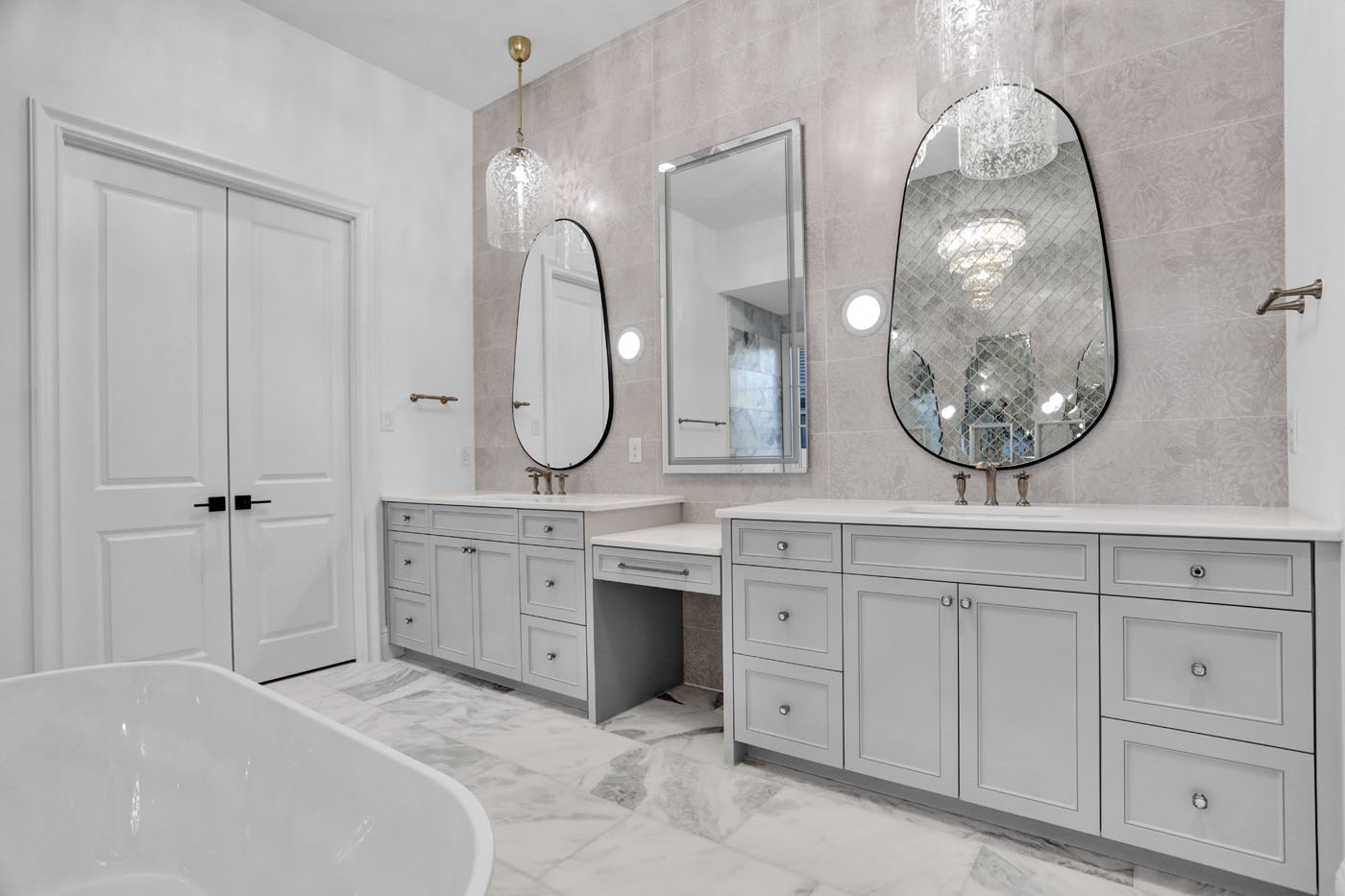
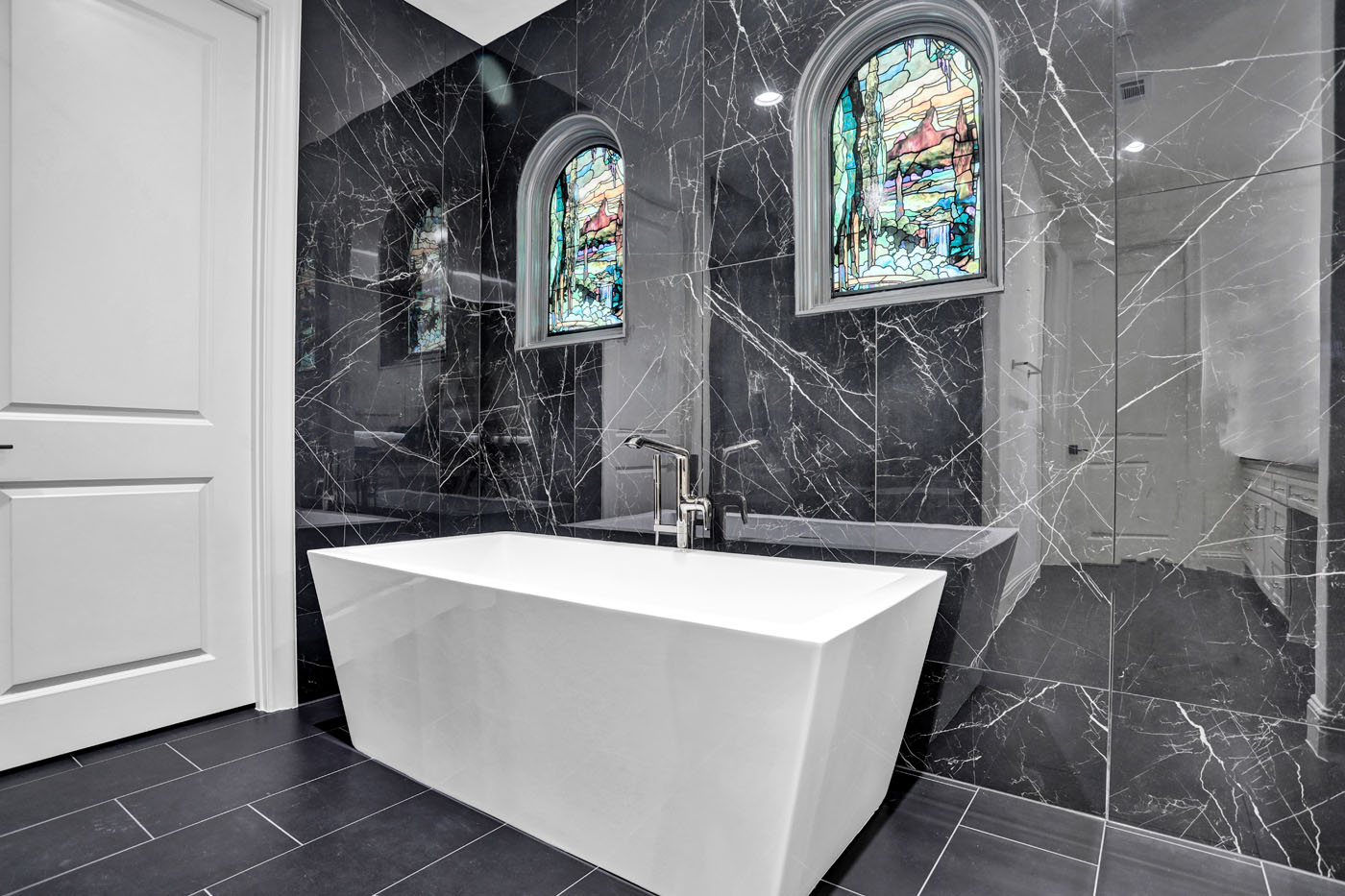
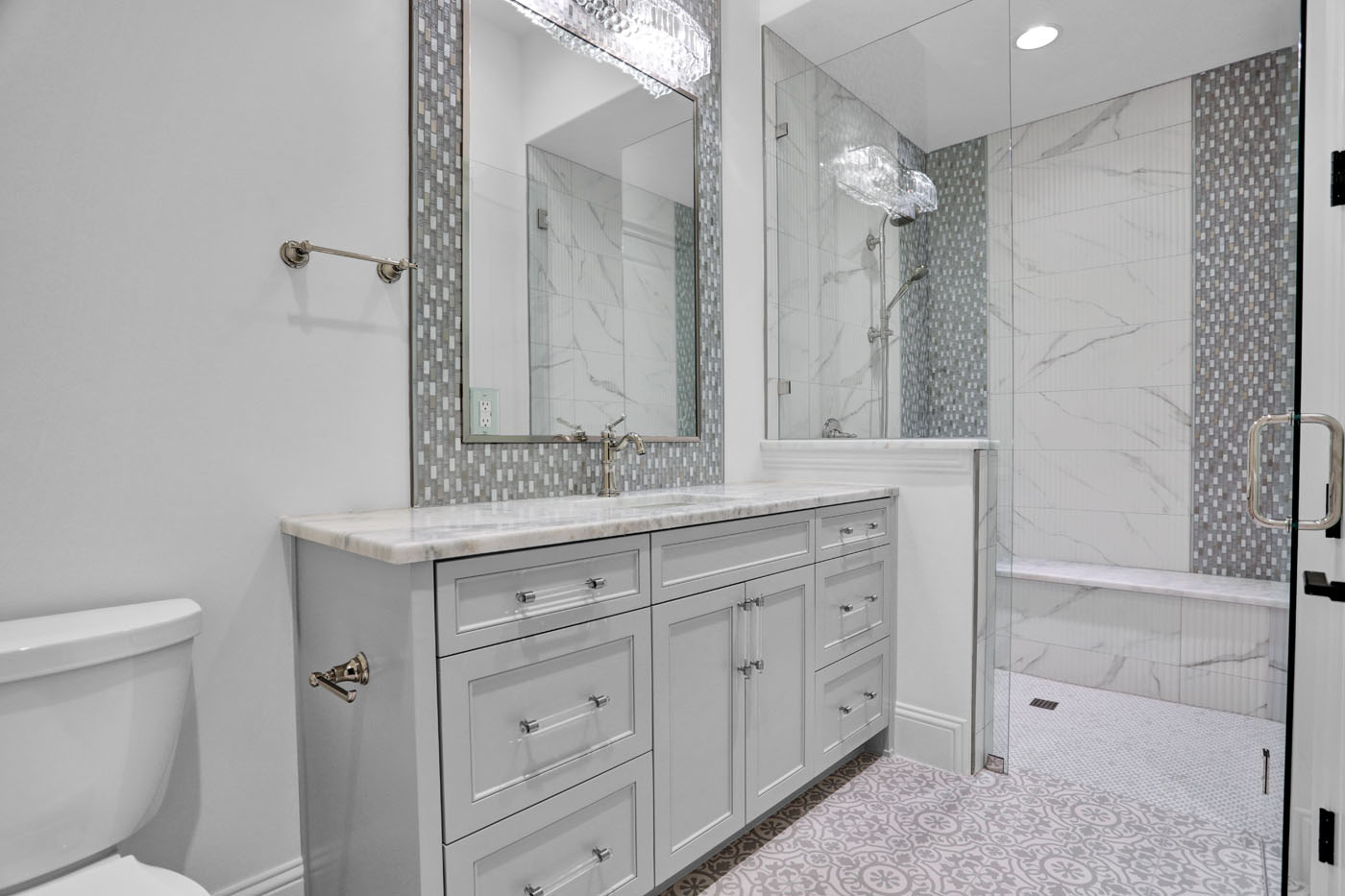
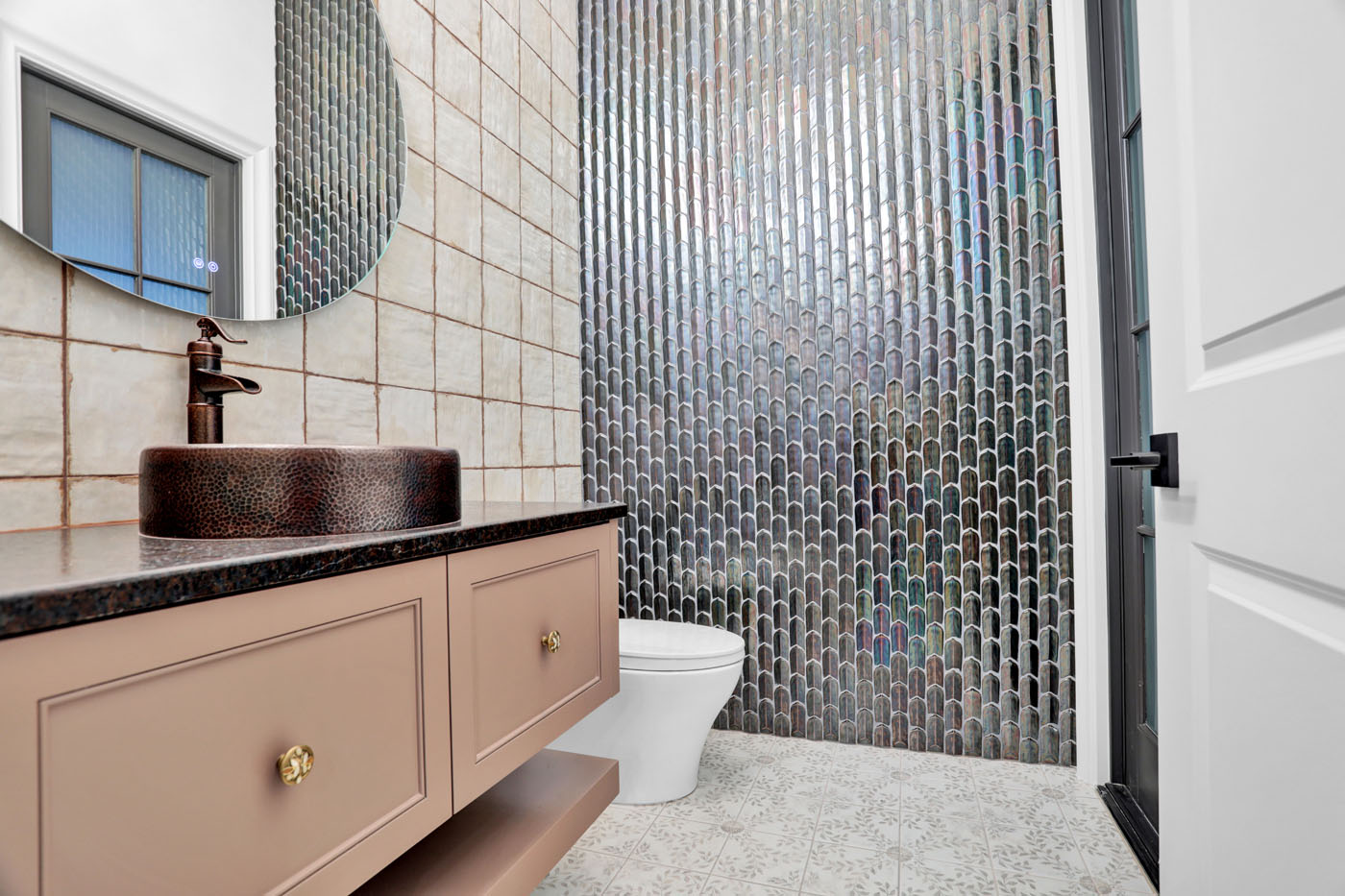
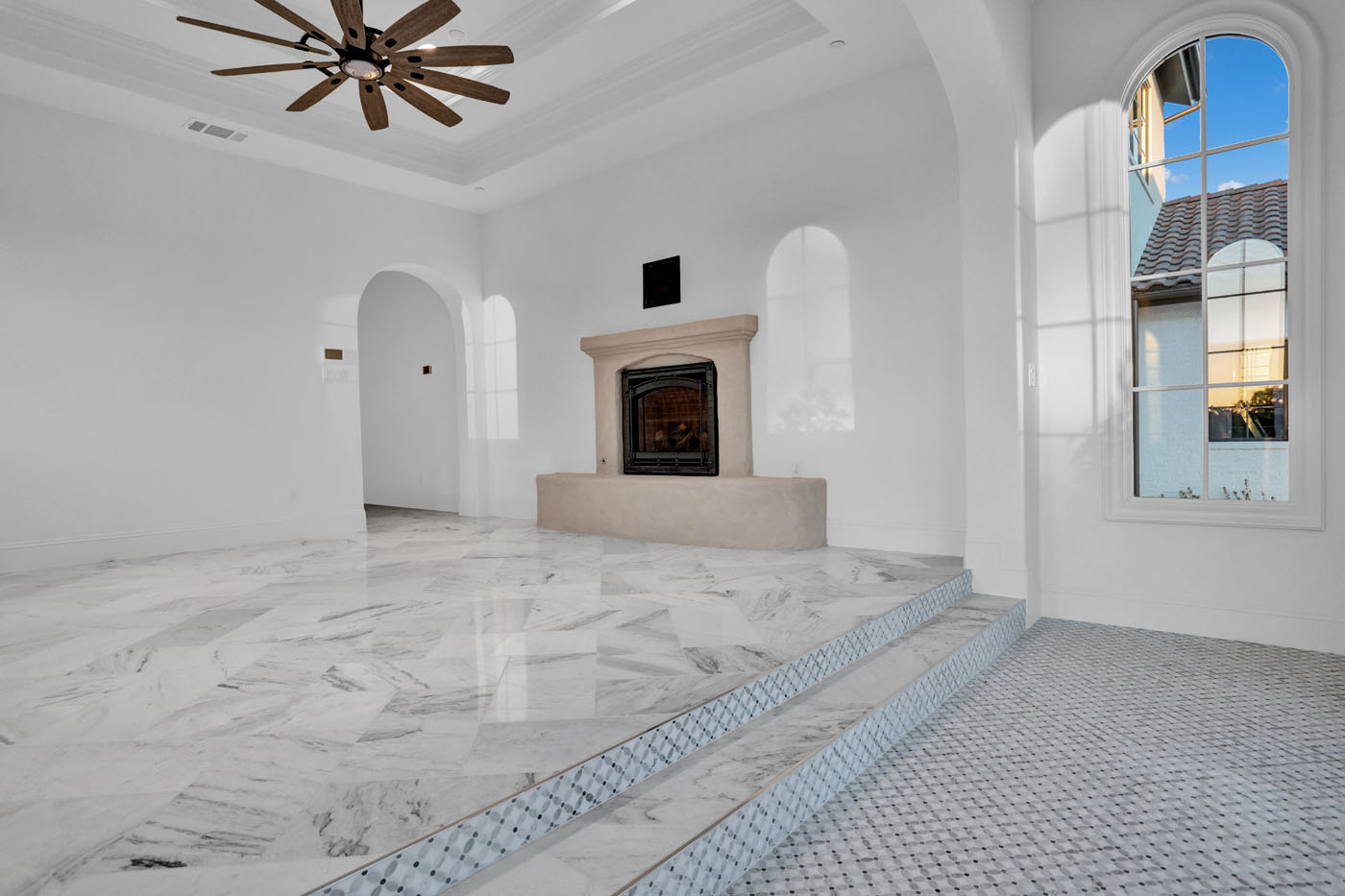
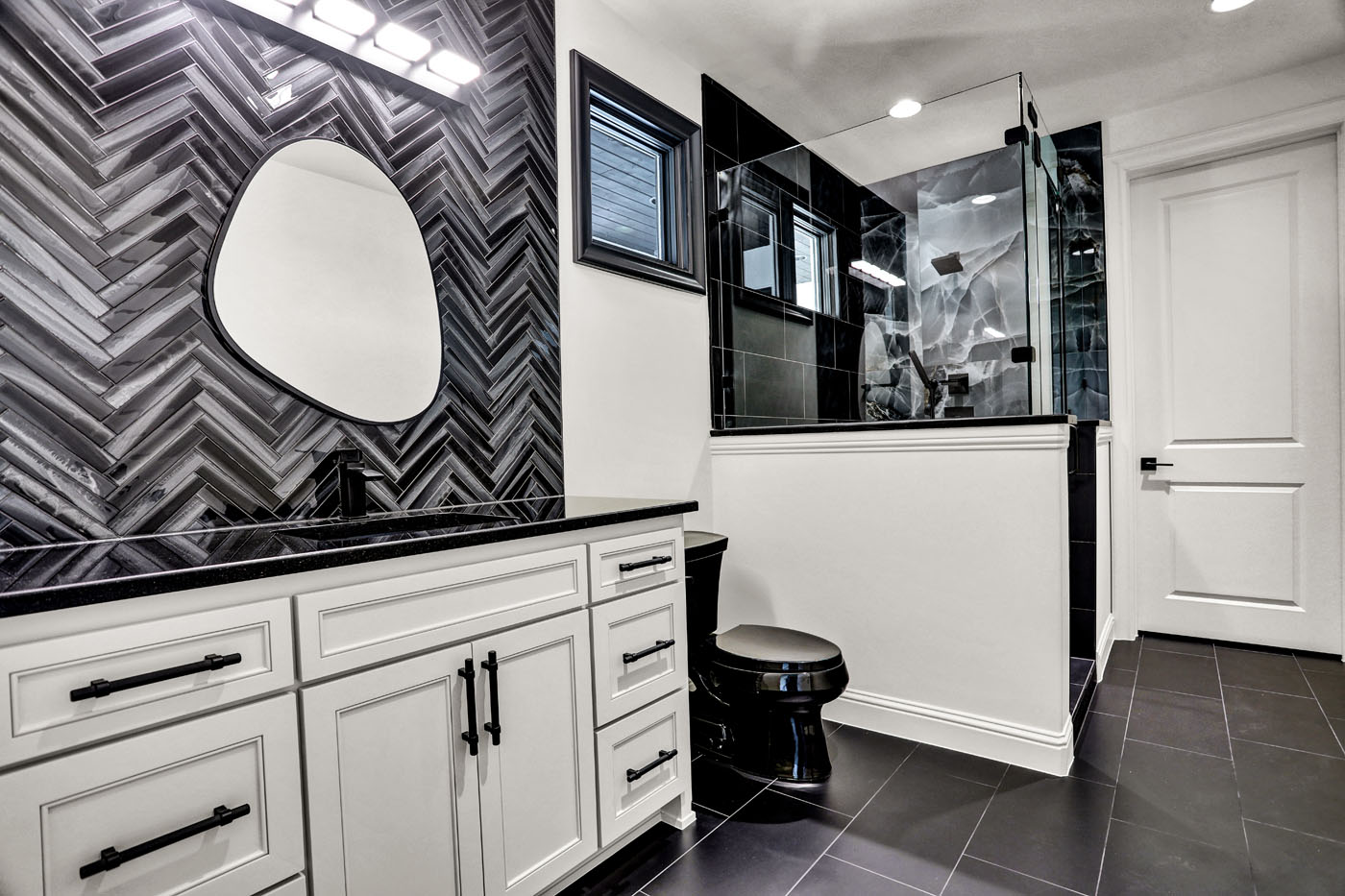
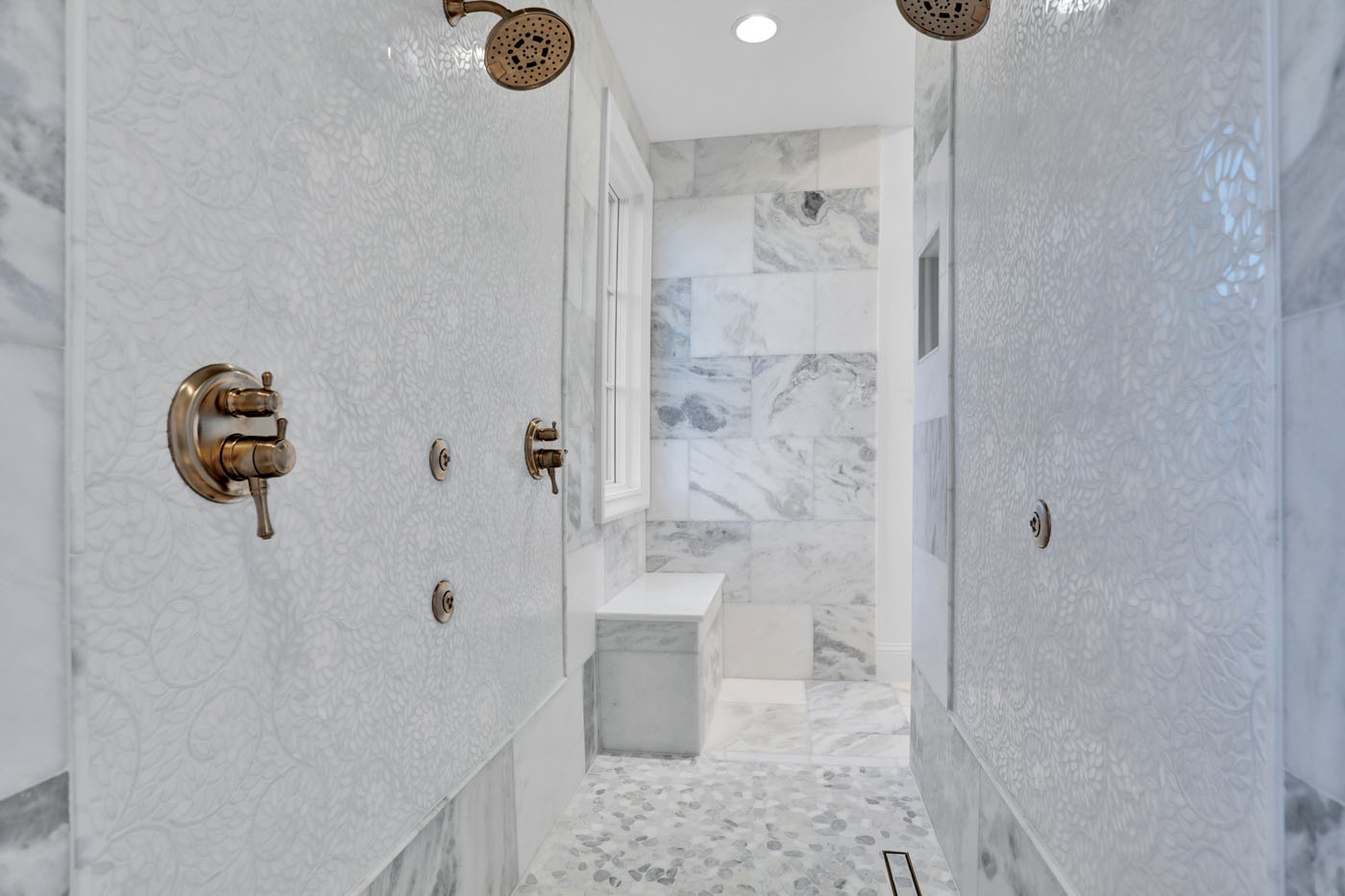
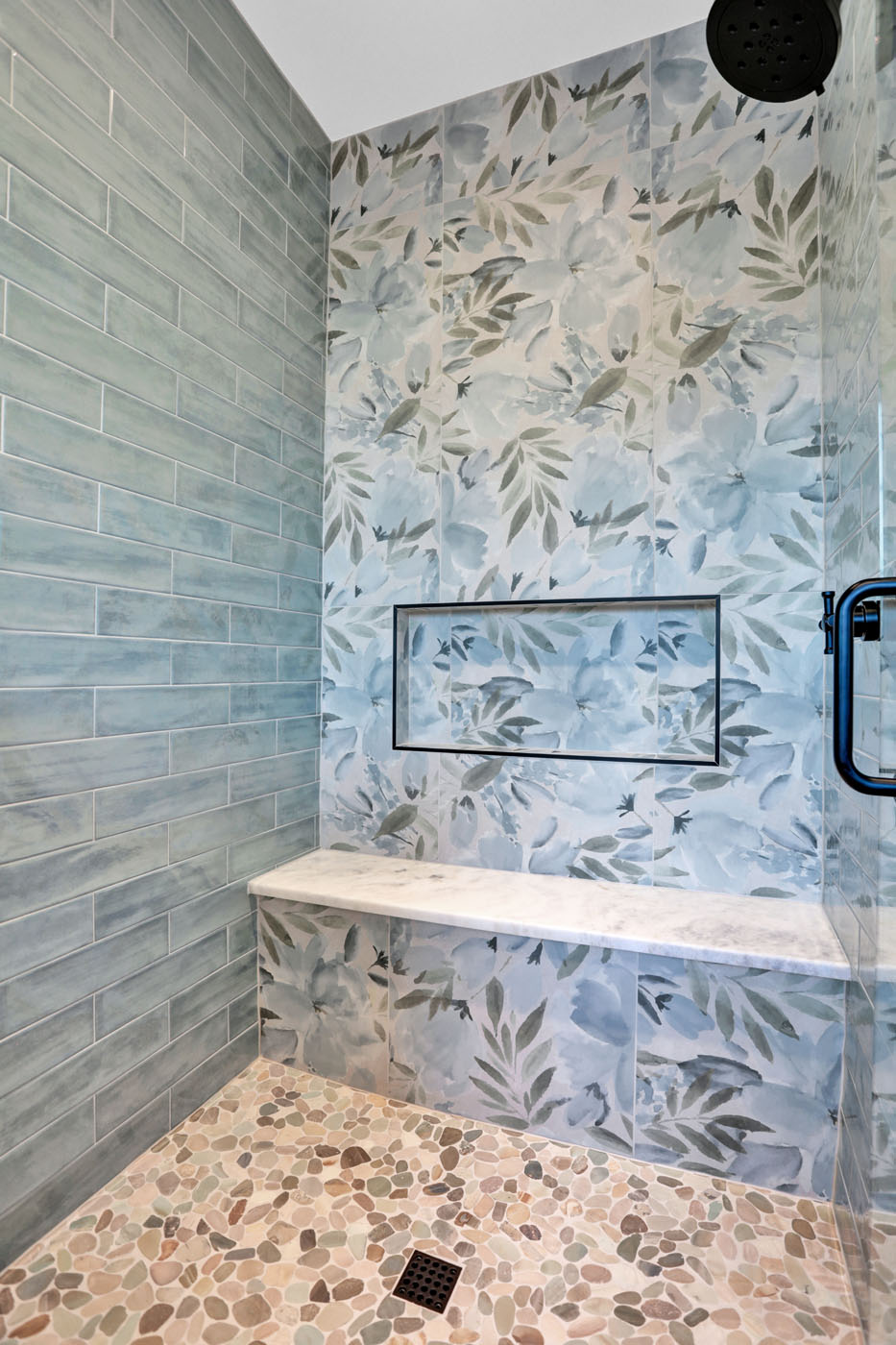
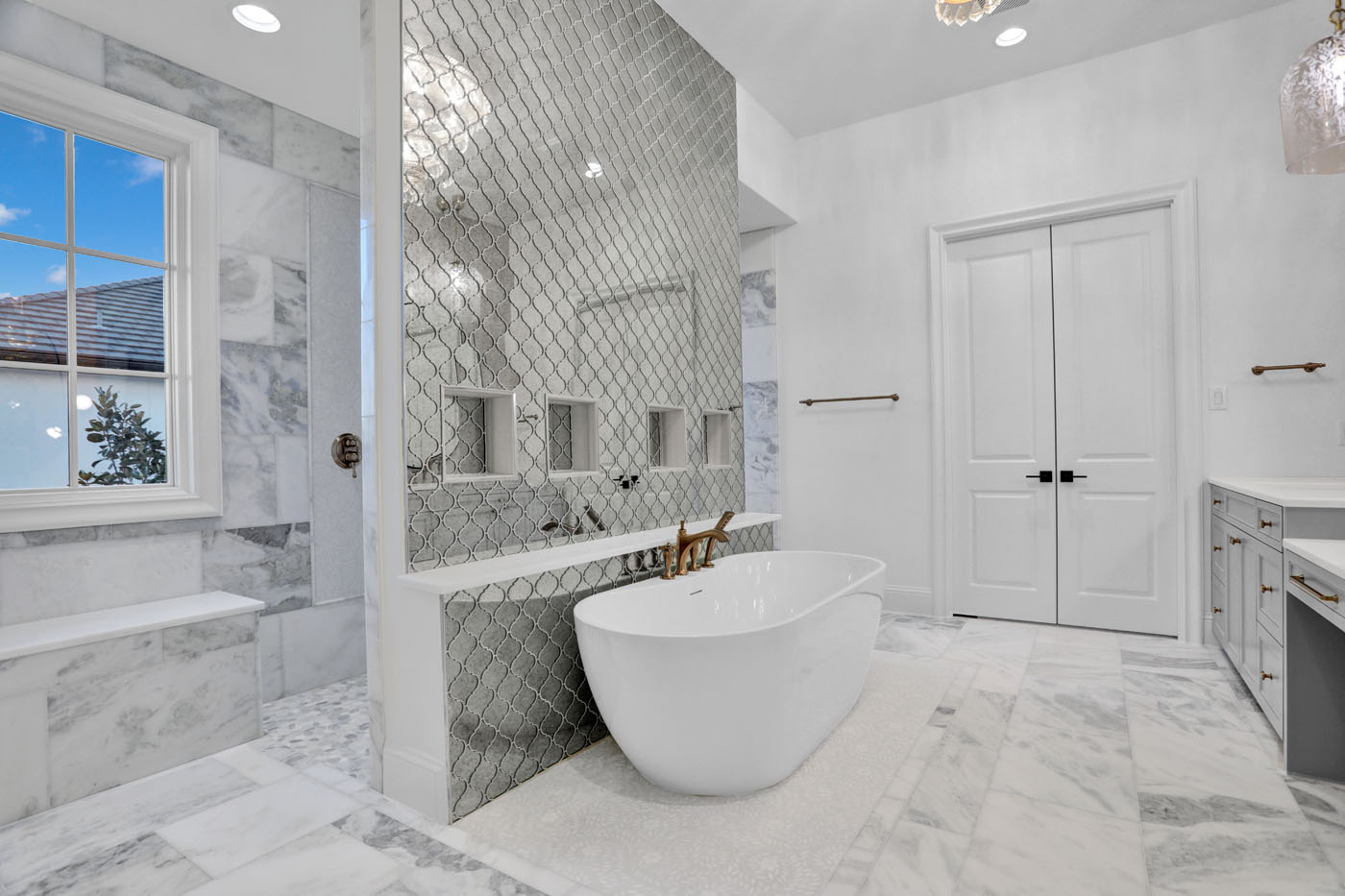
Porcelain1 tile is a type of ceramic made from fine clay and fired at higher temperatures, which results in a tile that is denser, stronger, and much less porous than standard ceramic.
In fact, according to the U.S. standard2 ANSI A137.1, a tile is considered porcelain if it absorbs 0.5% or less water. This low absorption rate makes porcelain highly moisture-resistant and a great choice for bathrooms, showers, and other wet areas.
Porcelain tile installation works well for shower walls, steam showers (with proper waterproofing), heated floors, and large areas with minimal grout lines.
Sweep or vacuum regularly to remove dust and debris. For deeper cleaning,3 use a mild, pH-neutral cleaner and avoid harsh chemicals or abrasive tools, which can damage the finish over time. While the tile itself doesn’t need to be sealed, sealing the grout occasionally helps to prevent stains and keep everything looking new.
Porcelain1 tile is a type of ceramic made from fine clay and fired at higher temperatures, which results in a tile that is denser, stronger, and much less porous than standard ceramic.
In fact, according to the U.S. standard2 ANSI A137.1, a tile is considered porcelain if it absorbs 0.5% or less water. This low absorption rate makes porcelain highly moisture-resistant and a great choice for bathrooms, showers, and other wet areas.
Porcelain tile installation works well for shower walls, steam showers (with proper waterproofing), heated floors, and large areas with minimal grout lines.
Sweep or vacuum regularly to remove dust and debris. For deeper cleaning,3 use a mild, pH-neutral cleaner and avoid harsh chemicals or abrasive tools, which can damage the finish over time. While the tile itself doesn’t need to be sealed, sealing the grout occasionally helps to prevent stains and keep everything looking new.
Ceramic tile installation is a popular and versatile choice for bathroom surfaces. Made from clay and fired at lower temperatures than porcelain, ceramic4 has a softer structure and is slightly more absorbent. To protect against moisture and stains, these tiles are typically finished with a glaze.
Ceramic tile works well for backsplashes, accent walls, and light-use bathroom floors. It can also be used on shower walls, but only when the tile is glazed correctly and waterproofed.
To keep ceramic tile looking its best, sweep or vacuum regularly to remove dirt and debris that could scratch the surface. Use a pH-neutral cleaner and a soft mop or cloth for routine cleaning. While a glazed finish surface resists stains, it's a good idea to seal the grout occasionally to help prevent discoloration and buildup.
Ceramic tile installation is a popular and versatile choice for bathroom surfaces. Made from clay and fired at lower temperatures than porcelain, ceramic4 has a softer structure and is slightly more absorbent. To protect against moisture and stains, these tiles are typically finished with a glaze.
Ceramic tile works well for backsplashes, accent walls, and light-use bathroom floors. It can also be used on shower walls, but only when the tile is glazed correctly and waterproofed.
To keep ceramic tile looking its best, sweep or vacuum regularly to remove dirt and debris that could scratch the surface. Use a pH-neutral cleaner and a soft mop or cloth for routine cleaning. While a glazed finish surface resists stains, it's a good idea to seal the grout occasionally to help prevent discoloration and buildup.
Because porcelain is a type of ceramic, it’s easy to confuse the two materials. However, there are a few important differences5 that may make one tile a better choice for your project than the other. This table offers a side-by-side comparison:
Slate7 is a natural stone formed from layers of compressed rock, which gives it a slightly textured surface and makes it well-suited for everyday use. It comes in a variety of colors, ranging from dark gray and charcoal to rich tones such as rust, green, and even purple.
Slate flooring works well in bathrooms as flooring, wall tile, and accent tile. Its naturally slip-resistant surface also makes it a smart choice for shower floors.
Because slate is a porous material, it should be sealed regularly8—at least once a year—to help protect it from moisture and stains. For daily care, use a pH-neutral cleaner and avoid vinegar or other acidic products, as they can damage the surface.
Slate7 is a natural stone formed from layers of compressed rock, which gives it a slightly textured surface and makes it well-suited for everyday use. It comes in a variety of colors, ranging from dark gray and charcoal to rich tones such as rust, green, and even purple.
Slate flooring works well in bathrooms as flooring, wall tile, and accent tile. Its naturally slip-resistant surface also makes it a smart choice for shower floors.
Because slate is a porous material, it should be sealed regularly8—at least once a year—to help protect it from moisture and stains. For daily care, use a pH-neutral cleaner and avoid vinegar or other acidic products, as they can damage the surface.
Travertine9 is a natural type of limestone that forms around mineral-rich hot springs. Over time, gases and water movement create small holes and pores throughout the stone, giving it a soft, textured appearance. The softer texture of travertine requires more care than other stone materials.
Travertine is known for its warm, timeless look and comes in a variety of soft earth tones like ivory, beige, walnut, and gold.
Travertine is a popular choice for vanity walls, tub surrounds, and both shower walls and floors. For areas with frequent moisture, filled and honed finishes offer better protection and easier maintenance. Travertine also retains warmth well, making it a great option for heated bathroom floors.
If you're looking for experienced travertine installers, our team can help you make the most of this beautiful stone in your bathroom.
Because travertine is porous, it needs to be sealed to protect it from moisture and stains. For weekly cleaning,10 use a pH-neutral, non-acidic cleaner, and avoid harsh products like vinegar or bleach, which can damage the surface.
Travertine9 is a natural type of limestone that forms around mineral-rich hot springs. Over time, gases and water movement create small holes and pores throughout the stone, giving it a soft, textured appearance. The softer texture of travertine requires more care than other stone materials.
Travertine is known for its warm, timeless look and comes in a variety of soft earth tones like ivory, beige, walnut, and gold.
Travertine is a popular choice for vanity walls, tub surrounds, and both shower walls and floors. For areas with frequent moisture, filled and honed finishes offer better protection and easier maintenance. Travertine also retains warmth well, making it a great option for heated bathroom floors.
If you're looking for experienced travertine installers, our team can help you make the most of this beautiful stone in your bathroom.
Because travertine is porous, it needs to be sealed to protect it from moisture and stains. For weekly cleaning,10 use a pH-neutral, non-acidic cleaner, and avoid harsh products like vinegar or bleach, which can damage the surface.
Slate and travertine are both natural stones known for their durability, but they differ in appearance, texture, and upkeep. Use the table below to see the differences and find the right fit for your bathroom:
Marble is a natural stone that forms when limestone is exposed to heat and pressure over time. This process creates a smooth, elegant material made mostly of calcite, which gives marble its signature veining and high-gloss finish.
If you’re looking for expert installation, our team of marble tile installers has the experience to handle this delicate material with care and precision.
Marble is a popular choice for shower walls, bathroom floors, vanity tops, and feature walls. In wet areas, choose honed or sealed finishes. The bold veining of marble makes it a standout choice for focal points like vanities or tub surrounds. If you're planning a remodel, our marble installers can help guide the process from start to finish.
Marble should be sealed regularly to protect it from stains and moisture, especially in high-moisture areas. For cleaning,13 use a pH-neutral cleaner made for natural stone, and avoid anything acidic or harsh, like vinegar, lemon, bleach, or abrasive pads. Spills — especially from toothpaste, shampoo, or other bathroom products — should be wiped up quickly.
For everyday care, use a soft cloth or mop to keep the surface clean without causing damage.
Marble is a natural stone that forms when limestone is exposed to heat and pressure over time. This process creates a smooth, elegant material made mostly of calcite, which gives marble its signature veining and high-gloss finish.
If you’re looking for expert installation, our team of marble tile installers has the experience to handle this delicate material with care and precision.
Marble is a popular choice for shower walls, bathroom floors, vanity tops, and feature walls. In wet areas, choose honed or sealed finishes. The bold veining of marble makes it a standout choice for focal points like vanities or tub surrounds. If you're planning a remodel, our marble installers can help guide the process from start to finish.
Marble should be sealed regularly to protect it from stains and moisture, especially in high-moisture areas. For cleaning,13 use a pH-neutral cleaner made for natural stone, and avoid anything acidic or harsh, like vinegar, lemon, bleach, or abrasive pads. Spills — especially from toothpaste, shampoo, or other bathroom products — should be wiped up quickly.
For everyday care, use a soft cloth or mop to keep the surface clean without causing damage.
Glass tile is made from melted and molded glass and is commonly used for walls, backsplashes, and decorative accents. In the U.S., it follows specific guidelines under ANSI A137.2,17 which is the standard that sets quality and performance requirements for glass tile.
When glass is installed in wet areas, special steps are required—including proper waterproofing, flexible grout, and the right setting materials—to keep it secure and long-lasting.
Glass tile is often used for shower walls, feature walls, niche accents, backsplashes, and vanities. However, it’s not recommended for flooring, as it can be too slippery underfoot.
For homeowners in need of reliable glass tile installers, our team has the tools and experience to handle the job with care.
Use a soft sponge or non-abrasive cloth with a pH-neutral cleaner to keep your glass tile looking clear18 and streak-free. Avoid harsh chemicals or scouring pads, which can scratch or dull the surface. For water spots or mineral buildup, a gentle mix of baking soda and water can help lift stains without damaging the tile.
Proper care is especially important after your glass tile backsplash installation to help extend the tile’s lifespan. If you’re unsure which products to use, we’re happy to recommend safe options and simple upkeep tips.
Glass tile is made from melted and molded glass and is commonly used for walls, backsplashes, and decorative accents. In the U.S., it follows specific guidelines under ANSI A137.2,17 which is the standard that sets quality and performance requirements for glass tile.
When glass is installed in wet areas, special steps are required—including proper waterproofing, flexible grout, and the right setting materials—to keep it secure and long-lasting.
Glass tile is often used for shower walls, feature walls, niche accents, backsplashes, and vanities. However, it’s not recommended for flooring, as it can be too slippery underfoot.
For homeowners in need of reliable glass tile installers, our team has the tools and experience to handle the job with care.
Use a soft sponge or non-abrasive cloth with a pH-neutral cleaner to keep your glass tile looking clear18 and streak-free. Avoid harsh chemicals or scouring pads, which can scratch or dull the surface. For water spots or mineral buildup, a gentle mix of baking soda and water can help lift stains without damaging the tile.
Proper care is especially important after your glass tile backsplash installation to help extend the tile’s lifespan. If you’re unsure which products to use, we’re happy to recommend safe options and simple upkeep tips.
Natural stone20 tile includes materials like marble, granite, slate, travertine, limestone, and quartzite. These materials are quarried from the earth and shaped by natural geological processes, which gives each tile its own unique pattern, color, and texture.
If you’re considering natural stone tile installation, it’s important to know that stone tiles also vary in hardness, porosity, and maintenance needs. Some are dense and better suited for high-use areas, while others are more porous and need regular sealing.
Natural stone is often used for bathroom floors, shower walls, and statement features like vanity tops or accent walls. Some homeowners also use large stone slabs in showers or around tubs to create a smooth, continuous surface with fewer grout lines.
Keep in mind that not all stone types are ideal for wet areas. Many require proper sealing and regular maintenance to stay protected over time. If you’re unsure what will work best, our stone tile installers can help you choose the right option.
Natural stone requires a bit more maintenance21 than man-made tiles. Most types should be sealed regularly to help prevent moisture damage and staining. For daily cleaning, use a pH-neutral cleaner that's safe for stone, and avoid harsh or acidic products like vinegar or bleach, which can damage the surface.
Care requirements can differ between stone types, so be sure to check what's recommended for your chosen material, or feel free to reach out to our team with questions.
Natural stone20 tile includes materials like marble, granite, slate, travertine, limestone, and quartzite. These materials are quarried from the earth and shaped by natural geological processes, which gives each tile its own unique pattern, color, and texture.
If you’re considering natural stone tile installation, it’s important to know that stone tiles also vary in hardness, porosity, and maintenance needs. Some are dense and better suited for high-use areas, while others are more porous and need regular sealing.
Natural stone is often used for bathroom floors, shower walls, and statement features like vanity tops or accent walls. Some homeowners also use large stone slabs in showers or around tubs to create a smooth, continuous surface with fewer grout lines.
Keep in mind that not all stone types are ideal for wet areas. Many require proper sealing and regular maintenance to stay protected over time. If you’re unsure what will work best, our stone tile installers can help you choose the right option.
Natural stone requires a bit more maintenance21 than man-made tiles. Most types should be sealed regularly to help prevent moisture damage and staining. For daily cleaning, use a pH-neutral cleaner that's safe for stone, and avoid harsh or acidic products like vinegar or bleach, which can damage the surface.
Care requirements can differ between stone types, so be sure to check what's recommended for your chosen material, or feel free to reach out to our team with questions.